Artist statement
The Christofuturist
I make things under the name the Christofuturist. Paintings, songs, picture books, websites, and the rooms where people meet each other. They are one body of work, and they argue one thing: technology and divine inspiration belong together, and the art gets better when they are.
The machine is fast and has no taste. A person has taste and is slow. Put them in the right order and you can make things that were not previously worth making, at a quality that used to require a budget.
The figure
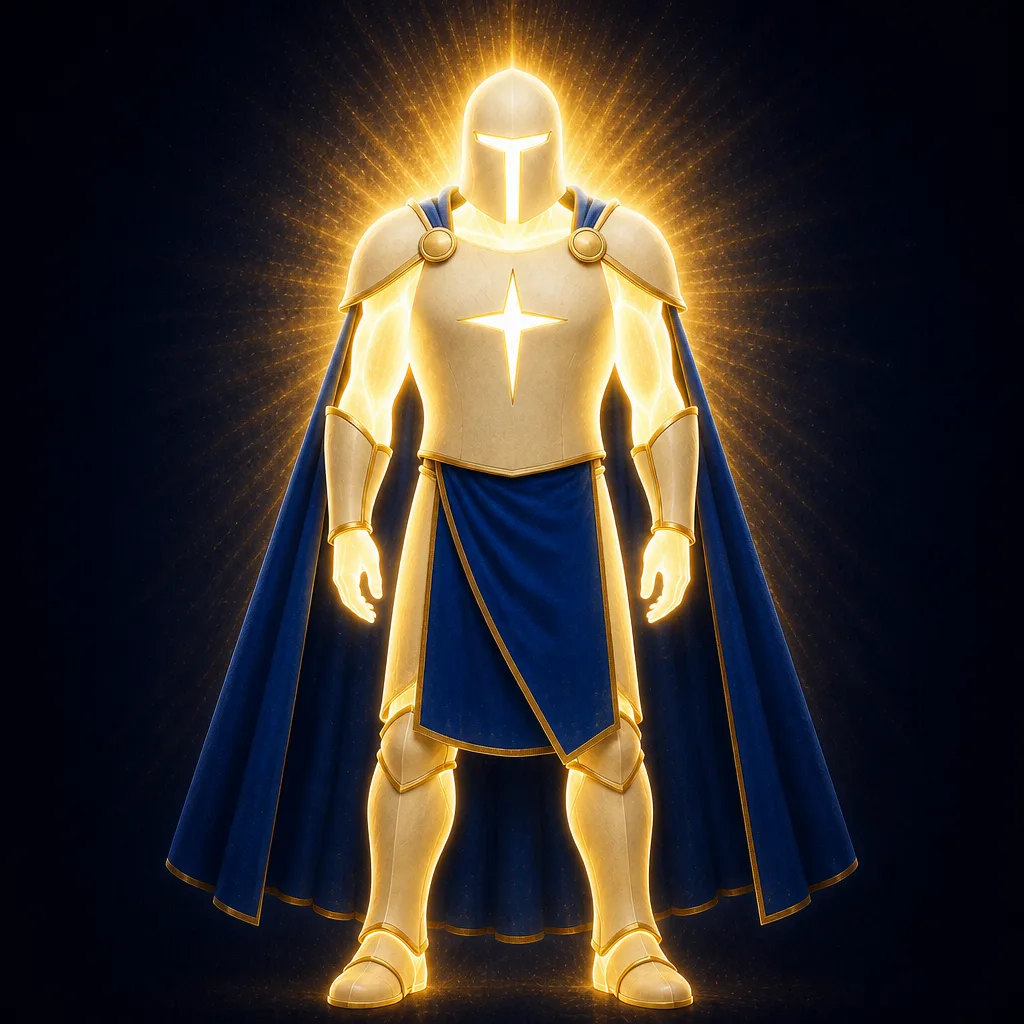
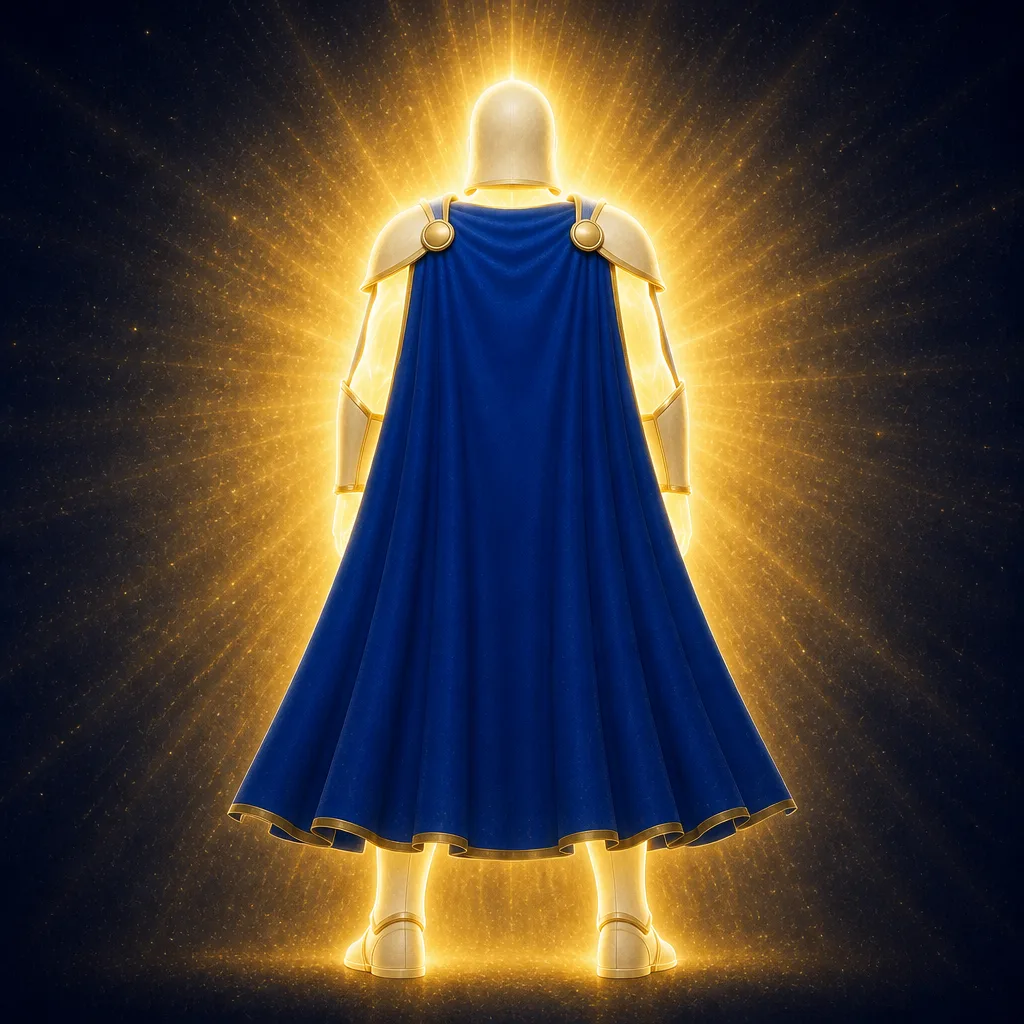
The Christofuturist is the name I record under, and this is what he looks like.
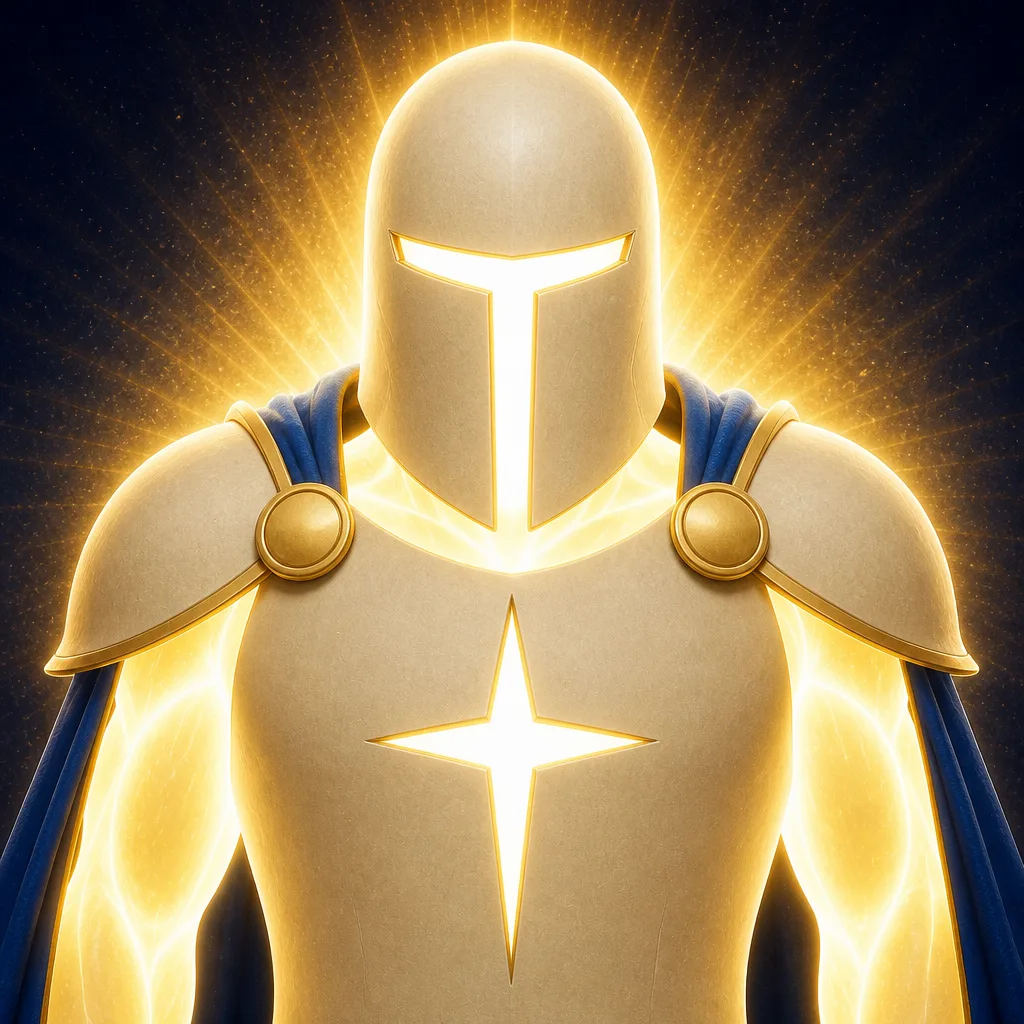
He is a being of light wearing armour. The armour is white, matte, and does not glow: it is a lit object, not a light source. The light is inside him, and where the plate does not cover, at the throat and the arms, you can see it.
He is not me. He has no face, no eyes and no skin, so there is nobody to recognise. I tried it the other way first and it was wrong inside a single round.
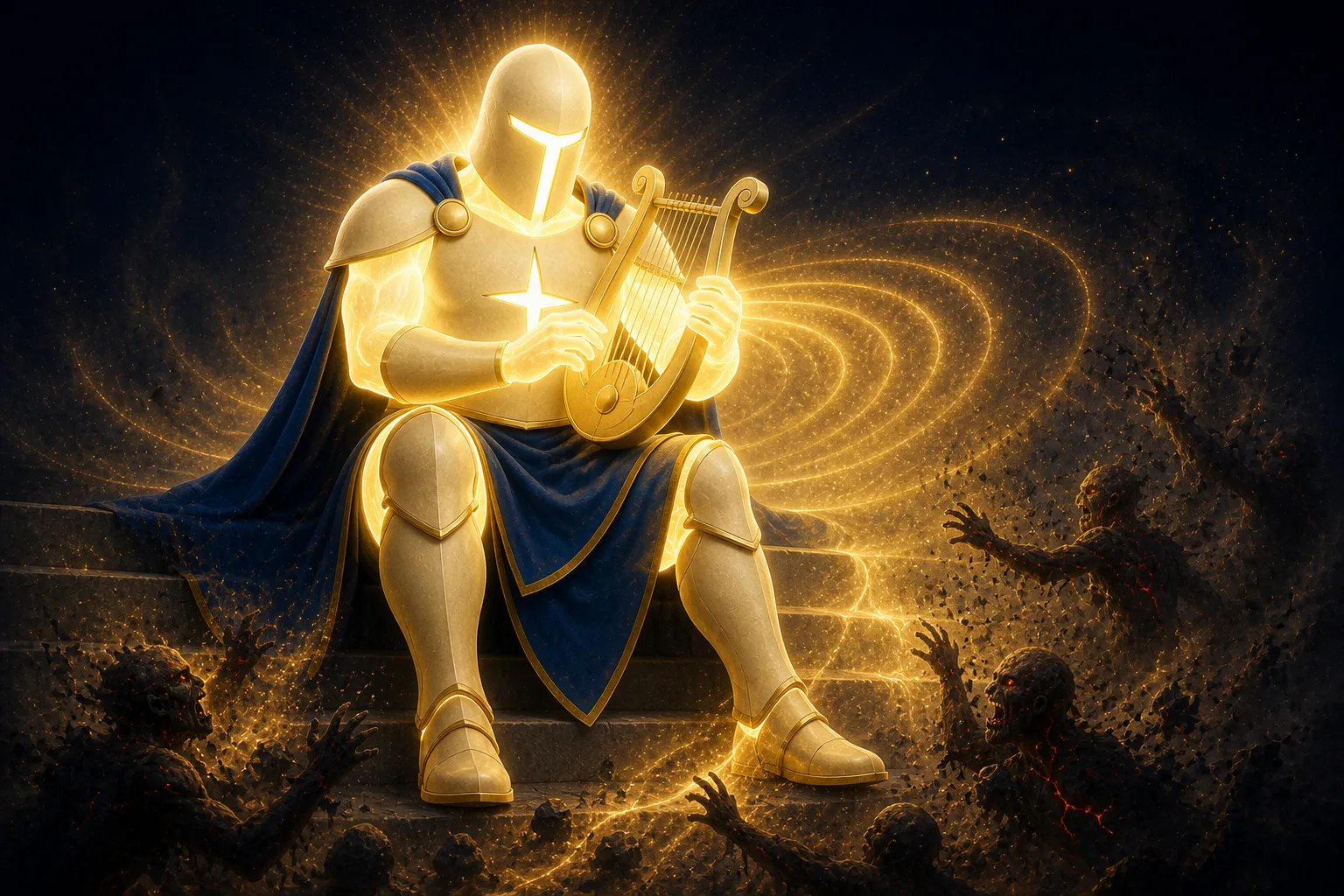
His mark is a four-point star cut clean out of his chest plate. It is a hole, and it glows because the armour is missing there. Nothing is added to this figure to make it holy. Something is taken away.
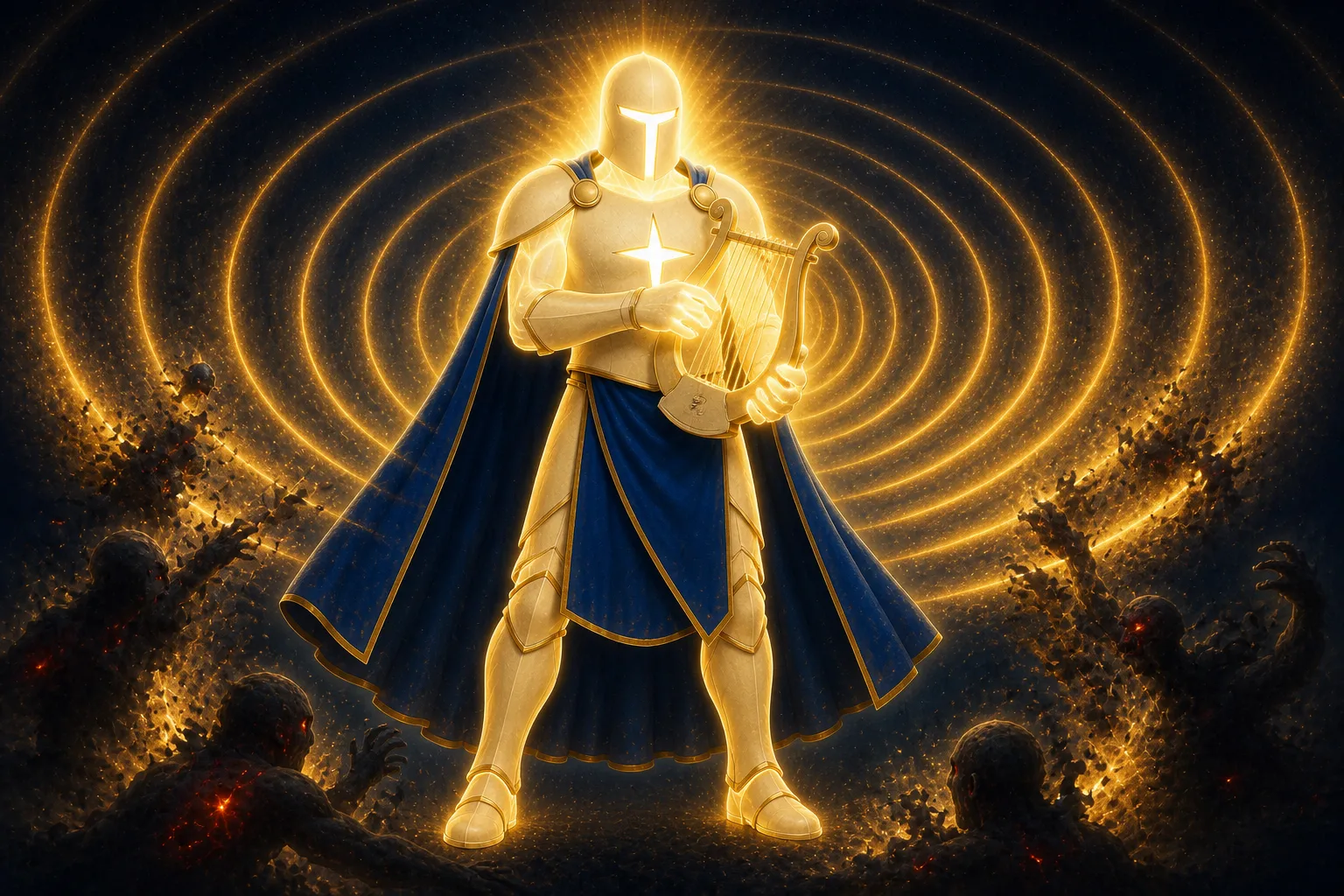
His weapon is an instrument
He carries no sword and no shield. He carries a lyre, and it is the only thing in his hands in any picture.
This is David’s instrument. A tormenting spirit comes on Saul, David plays, and the spirit leaves. There is no duel.
That is why the figure is a musician rather than a warrior. The adversaries in these pictures are never being defeated. They are leaving, because of what is being played.
And David took the lyre and played it with his hand. So Saul was refreshed and was well, and the harmful spirit departed from him.
Why he is light and not a person
The first versions used my own face and all of them were wrong. A recognisable face makes the viewer ask who that is, and the answer is not interesting.
So the helm has one opening, shaped like a T, with only light behind it. The build is large and deliberately smooth: the mass of a strong man and none of the definition. He is not a body. He is a shape light is taking.
The armour had to stay dark
White armour next to a blazing body wants to blow out into one flat shape. So the rule is written as a mechanism: warm gold on the edges facing the light, genuinely dark shadow in every recess, chalky and matte like unglazed porcelain. It catches light and never emits it.
A man who glows is a special effect. A man carrying something that shows at the seams is a different claim.
The adversaries have already lost
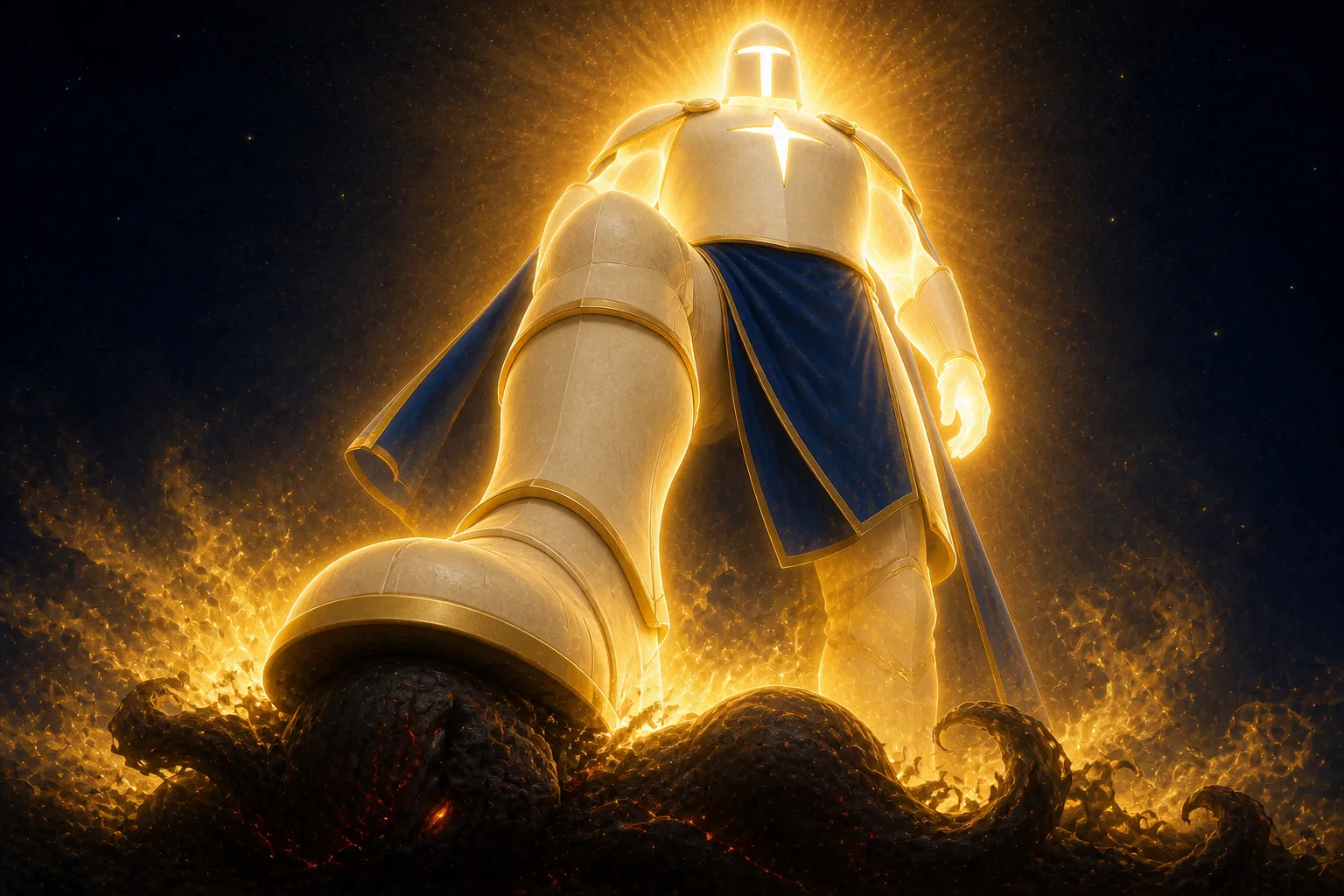
They are smoke that holds a figure’s shape, with dull ember cracks and eyes. They are always below his waist, always smaller, always coming apart. They never touch him.
The test I check each image against is not whether they look frightening. It is whether it is obvious they have already lost.
They carry the only red in any picture. In this world red is reserved for toil and for the enemy, which is why the cape is blue.
What the work is for
I make things because making things is part of what a person is for. Not as output. As a way of participating in something.
The test I hold work to is whether it leaves someone more alive: more able to see what is true, more willing to want what is good, more at home in what is beautiful. If a piece does that for one person it was worth making. Most of what I make is for one person.
Technology and inspiration are not competitors
The machine is fast and has no taste. A person has taste and is slow. Put them in that order and you can make things that were not previously worth making, at a quality that used to need a budget.
The order matters more than the tools, because three decisions are mine and cannot be handed over. That a thing needs to be made at all. What direction it takes. And whether it is good enough to release into the world in service of someone. A machine has no standing on any of those. It can make the thing; it cannot judge whether the thing should exist or whether it is worth another person’s attention.
So a generated result is a candidate and nothing more. It becomes real when I look at it and say so. If that ever inverts, the work stops being mine and stops being worth anything.
What I make
Songs, picture books, paintings, websites, and the rooms where people meet each other. Iterations cost pennies now, which changes what is worth attempting. I once made seventeen versions of one refrain across seventeen genres because the refrain was strong enough to survive all of them. Nobody would fund that.
I invented a genre called Abbapiano, out of amapiano: a piano for Abba, the Father. It is meant to make it easy to glorify God while dancing to music you would put on anyway.
Websites and communities count as art for the same reason. A page is a room you built for someone you may never meet, and it can hurry a person or let them settle. Who is in a room determines what the room is, so deciding who belongs is the creative act.
How it is made
Every piece is generated against a specification I wrote first, and every finished asset carries a record of how it was made: the model, the exact instructions, every reference by checksum. That record is written as a side effect of generating, because provenance you have to remember is not provenance.
When something comes out wrong I fix the specification rather than touching up the image. Patch the picture and you have one better picture. Fix the rules and every future picture inherits it.
What I refuse is more diagnostic than what I like: glossy airbrushed finish, neon, cheap 3D render, symmetry that resolves too neatly, and work built to be quotable rather than true.
The machine can make the thing. It cannot decide that it should be made, where it should go, or whether it is good enough to put in front of a person. Those decisions are the artist’s, and they are the art.
See the work